
British engineering is something amazing to behold. As one of the old world powers and still a country with a lot of remaining influence on the rest of the modern world, British engineering has donated a lot to the progression of modern engineering that we see today. From the very first steam engines to huge power plants, you can see a number of British engineering designs all around the world.
Whether you’re interested in important placeholders of British history, or you really love getting into the minds of the traditional British engineers, we have with UK engineering company Southern United at the top ten engineering feats of Great Britain of old.
The Thrust SSC: The Fastest Car in the World
In 1997 a car managed to break the sound barrier. This car was the Thrust SSC otherwise known as the Thrust Super Sonic Car, the fastest car built in the world. It currently holds the land speed record, where it achieved a speed of 763mph, becoming the first car to bread the sound barrier. It is currently housed at The Coventry Transport Museum in Coventry.

The World’s Largest Bell Foundry
Located in Loughborough, Taylor’s Bell Foundry is the world’s largest currently working bell foundry. The bell foundry manufactures bells to be used in clock towers, chimes, change ringing peals and carillons. The foundry also has a museum of bells and bellfounding, the only one of its kind within the UK.
The Anderton Boat Lift
Standing at three storeys high and built in 1875, the Anderton Boat Lift was designed to lift boats 50 feet from the River Weaver to the Trent & Mersey Canal. The lift worked fully until 1983, when some deterioration was discovered and repaired in 2003. The lift is still in working order to this day.
The World’s first all Big Gun Battleship; Dreadnought
First launched in 1906, the Royal Navy’s Dreadnought was the first of what would eventually come to be one of the predominant types of battleship used in combat and for defence for most of the early 20th Century. With an ‘all-big-gun’ armament scheme and steam turbine propulsion, it was a revolutionary battleship with features never before seen, that renewed the naval arms race between Germany and the UK.
Puffing Billy: The Oldest Steam Locomotive
Built in 1813-1814, Puffing Billy was used to haul coal chaldron wagons from the Wylam mine to the Lemington-on-Tyne docks located in Northumberland. It remained operational until 1862, where it was retired and then put on display in the Patent Office Museum in South Kensington. Two replicas of the Puffing Billy have since bin built and can be found at the Beamish Museum in the North of England and the German Museum in Munich
The Channel Tunnel
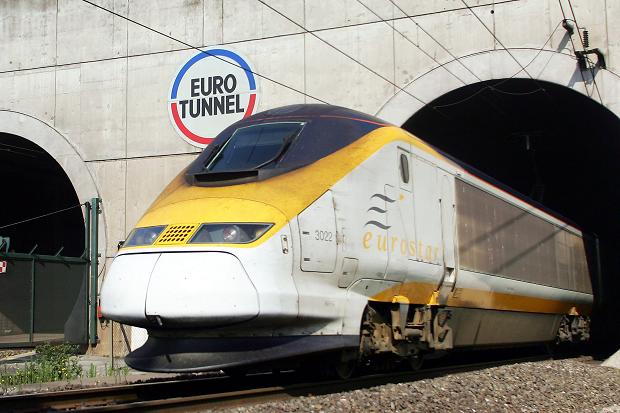
Who could forget the channel tunnel? At 31.4miles, with 23.5miles running underwater, the tunnel has the longest undersea portion of any tunnel worldwide. Construction on the ‘chunnel’ began in 1988 and concluded in 1994, opening to the public shortly after. As part of European Heritage, in 2014 the Channel Tunnel was open for a set amount of 90 minute tours to learn more about the construction and the history of the tunnel.
The Derby Turning Shed
The oldest turning shed in the world, the Derby Roundhouse was build in 1839 and holds the Guinness World Record for the oldest surviving railway roundhouse in the world. A tour is available for those who would like to know more about the unique history of the roundhouse.
The Falkirk Wheel
Another historical boat lift, this time located in Scotland; the Falkirk Wheel was essential in restoring mobility throughout Scotland. It is the world’s first and only rotating boat lift, constructed in 2002 and was marked by Her Majesty The Queen.
The London Underground
A fantastic feat of engineering that many of us use day to day, but hardly even think about. The London Underground system was first built in 1890 as the City and South London Railway line and has since grown to a whopping 250miles of track with 270 stations to date.
The World’s First Passenger Train
Built in 1830, the Liverpool & Manchester Railway was initially used to transport goods between the port of Liverpool and Manchester, the huge industrial powerhouse, but was adapted to transport people and eventually came to revolutionise how we think of transport today. The train is currently located in the Museum of Science and Industry in Manchester.
With such a huge choice of engineering wonders to choose from, which one will you attempt to visit first? Some of these feats of British engineering can only be truly appreciated up close and personal, whereas others are a testament to the minds of its generation. Like the presence of the ancient Egyptian pyramids, we can only hope that these fantastic feats of engineering will be enjoyed by generation after generation.